
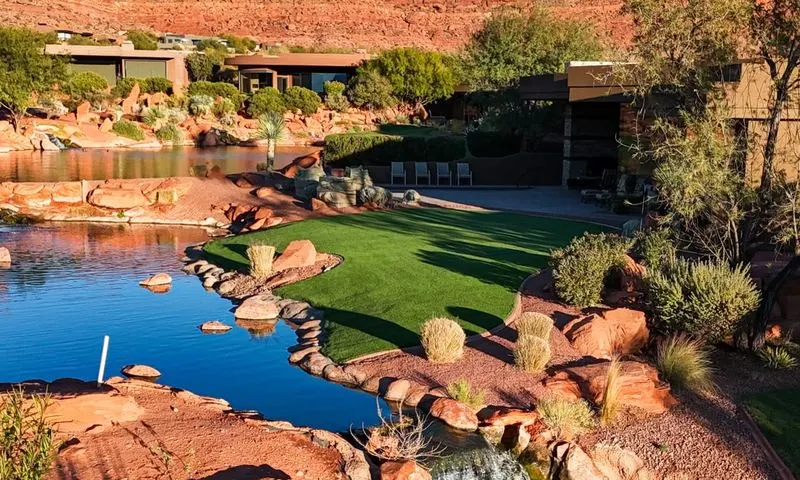
St. George, Utah
Practice Every Day. Water Nothing.
Custom-contoured synthetic putting greens built to the roll speed you ask for, with real cups, proper sub-drainage, and a fringe collar you can chip onto. Zero irrigation, zero mowing, playable in February.
- 9–11
- Typical stimp
- 2–4
- Day build
- 15–20
- Year lifespan
- 365
- Playable days
Why Build One
The Base Is The Whole Game
Anyone can roll green turf across a flat patch of yard. What separates a green you still use in year five from one that becomes expensive decoration is everything underneath it: how precisely the aggregate was screeded, whether the contours were shaped into the base or faked at the surface, and whether each cup drains.
We build the shape first. Ridges, subtle tiers, and fall-offs get compacted into the base so your putts actually break — which is the difference between practicing and rolling balls across a carpet. Then the surface gets screeded to a far tighter tolerance than a standard lawn, because a few millimeters of inconsistency is a putt that misses.
The result is a surface that reads true, holds its speed, drains after a monsoon, and never needs water, mowing, rolling, or top-dressing. In St. George that also means it is playable in January when actual courses are slow and overseeded.
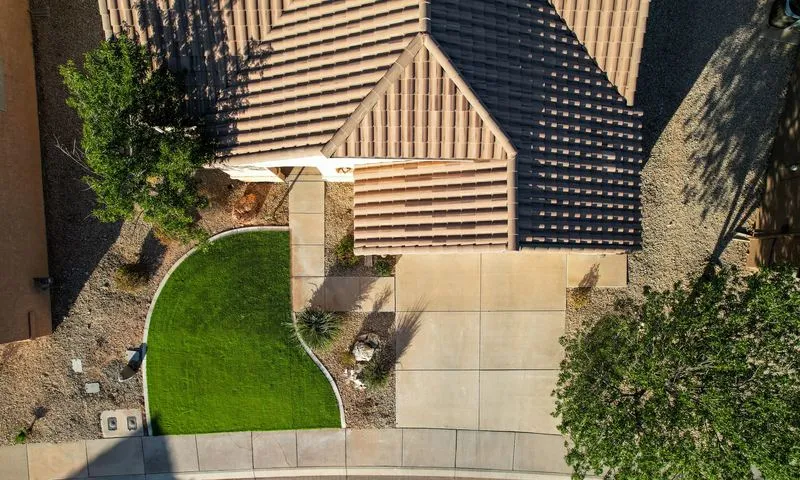
How We Build
Built Like A Real Green
True-roll surface
Short-pile, high-density putting turf with silica infill brushed to a consistent depth so the ball tracks straight and holds its line.
Shaped base
Contours, tiers, ridges, and fall-offs are built into compacted aggregate before the turf goes down. The shape is permanent, not a surface trick.
Cup sub-drainage
Regulation cups set with dedicated drainage beneath each one, so rain and rinse water leave the hole instead of standing in it.
Fringe collar
A longer-pile collar around the perimeter that frames the green, holds a chip, and transitions cleanly into lawn, hardscape, or gravel.
Desert-rated
UV-stabilized fiber and heat-reflective infill specified for full-sun Southern Utah exposure so color and roll hold up.
Finish details
Optional sand traps, lighting integration for evening putting, flagsticks, and markers set at your chosen distances.
Sizing
How Much Space Do You Need?
A rough guide based on greens we have built. We will confirm what fits during the on-site design walk.
| Footprint | Cups | What it supports |
|---|---|---|
| 150–250 sq ft | 1–2 | Side yard or patio-edge green. Short putts, gentle break, daily reps. |
| 250–500 sq ft | 2–3 | The most common residential build. Real contour, varied putt lengths, fringe collar. |
| 500–800 sq ft | 3–4 | Multiple tiers, longer lag putts, and a dedicated chipping approach. |
| 800+ sq ft | 4–6 | Short-game complex territory — chipping areas, sand traps, lighting for evenings. |
Build Process
Design to First Putt
- 01
Design on site
We walk the yard, mark the footprint, and sketch cup placement, contour, and fringe based on how you actually want to practice.
- 02
Excavate & shape
Existing material is removed, then aggregate is built up and compacted in lifts to form the ridges, tiers, and fall-offs.
- 03
Screed to tolerance
The fine layer is screeded and compacted to a much tighter tolerance than a lawn — this is what produces a predictable roll.
- 04
Turf, cups & infill
Turf is seamed and stretched, cups are set with drainage, infill is brushed in, and we putt it with you before signing off.
Worth Considering
Add Lighting And Putt After Dark
Because we install both services, we can integrate app-controlled lighting around the green while the trenching is already open. One crew, one schedule, one warranty call if anything ever needs attention.
Explore Permanent Lighting- Lighting around the green for evening practice
- Scheduled on at sunset, off at your bedtime
- Same crew, same visit, no second contractor
- One point of contact for service on both
Putting Green Questions
Before You Build
How much space do I need for a backyard putting green?
How fast will my green roll?
Can you add contours, tiers, and breaks?
Can I chip onto it?
What goes under a putting green?
How much maintenance does a putting green need?
Will it work in full St. George sun?
How long does a putting green take to build?
Free Design Visit
Let's Design Your Green.
We walk the yard, mark a footprint, talk through contour and cup placement, and give you a written price. No charge and no obligation.
- Free on-site estimate
- Licensed & insured
- 24-hour response