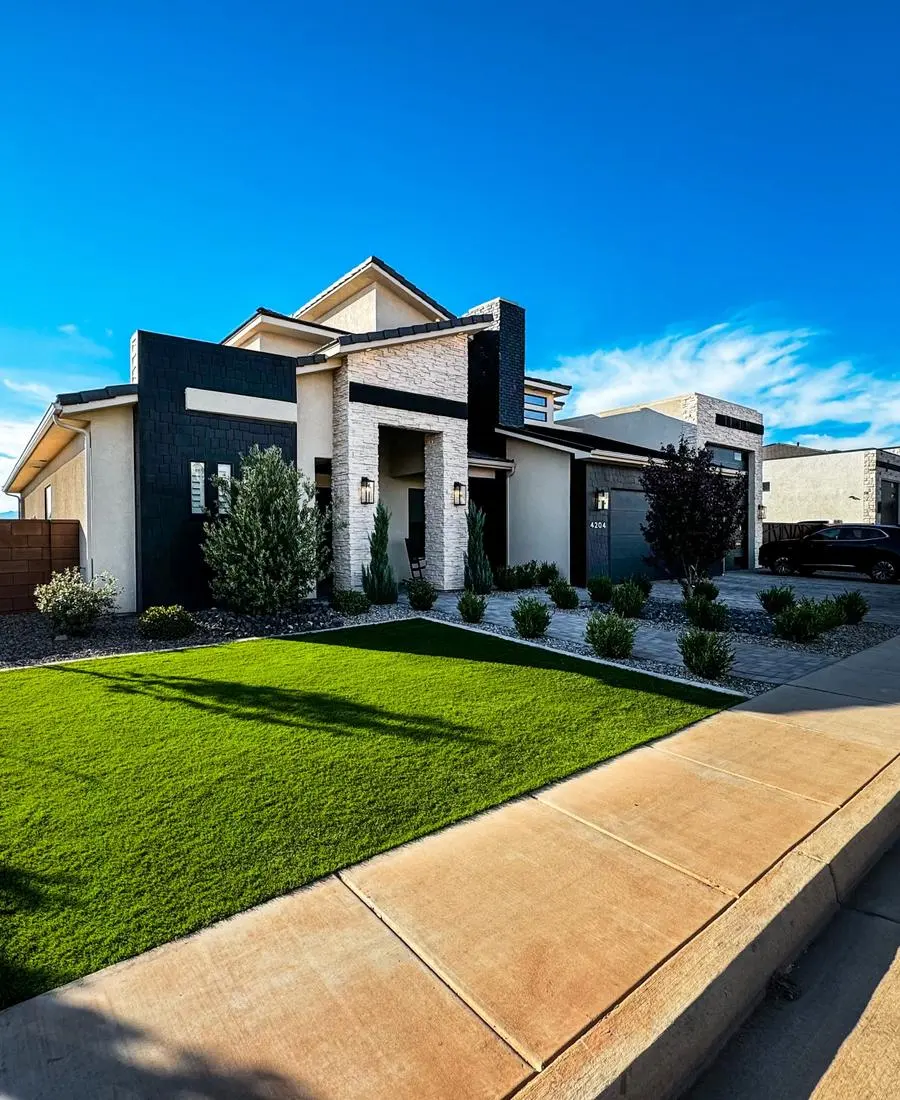
 Artificial Turf
Turf cost in St. George
How artificial turf is priced in St. George, why two yards of the same size quote differently, and what base prep actually includes in a real bid.
Read the guide
Artificial Turf
Yes, turf runs warmer than shaded grass in full sun. Here is why, how much it matters in a desert climate, and what genuinely lowers surface temperature.
The short version
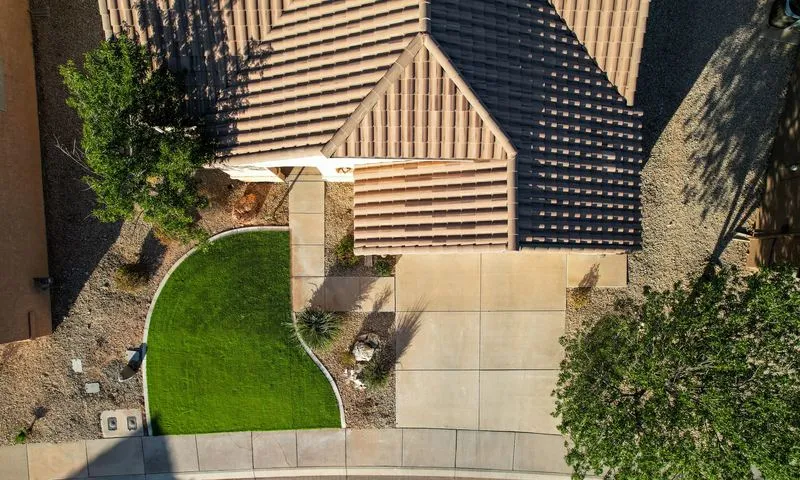
Synthetic turf does get warmer than shaded natural grass in direct sun — similar in behavior to a patio or driveway. Heat-reflective infill, shade, and a 60-second rinse all reduce it substantially. In a full-sun yard with barefoot kids and no shade plan, it is worth planning around.
This is the question we get asked most often about turf, and it’s the one the industry tends to answer evasively. So here’s the straight version.
Natural grass stays cool through evapotranspiration — it’s constantly moving water from its roots out through its blades, and that evaporation carries heat away. It is, functionally, a very large and inefficient swamp cooler.
Synthetic turf has no water to move. Like every other dry surface in your yard — concrete, pavers, decorative rock, asphalt, composite decking — it absorbs solar radiation and its surface temperature rises in direct sun.
Any company telling you their turf stays cool in full Southern Utah sun in July is either misunderstanding the physics or hoping you do.
The useful comparison isn’t turf versus grass. It’s turf versus the other dry surfaces you already walk on.
Your concrete patio, your paver walkway, your driveway, and your decorative gravel all behave the same way in direct sun. If you’re already comfortable crossing your patio barefoot in the afternoon, turf is in similar territory. If you avoid your patio barefoot in July, you’ll want a plan for the turf too.
Two things matter a great deal more than the turf product itself:
Sun exposure. A yard that gets full afternoon western sun is an entirely different situation from one shaded by the house, a tree, or a patio cover. This is the single biggest variable, and it’s about your lot, not about turf.
Time of day. Surface temperature peaks in mid-to-late afternoon and drops quickly once the sun angle changes. Mornings and evenings are generally non-issues even in summer.
Not all of the commonly cited solutions are equally real.
This is the most meaningful product-level choice. Standard silica sand and crumb rubber absorb and hold heat. Infills engineered to reflect solar radiation rather than absorb it measurably reduce surface temperature. For full-sun installs in St. George we specify this by default rather than offering it as an upsell.
A 30 to 60 second pass with a hose drops the surface temperature substantially and immediately. The effect lasts a while rather than forever, but it entirely solves the “kids want to play out there right now” problem. It’s also a tiny fraction of the water a real lawn would have consumed to stay alive that same day.
Shaded turf isn’t hot. If any part of your plan includes a patio cover, pergola, shade sail, or a tree that will mature over the area, that addresses the issue more completely than any product choice. Worth considering as part of the same project.
Lighter and multi-tone turf absorbs marginally less than very dark turf. It’s a real effect but a small one, and we wouldn’t pick a color you like less for it.
Shorter, denser turf holds somewhat less heat in the canopy than tall pile. Again real, again minor.
Some products are genuinely engineered to perform better thermally. Many are simply marketed that way. Ask for actual test data rather than accepting the adjective.
Dogs are the most common real concern, and reasonably so — they’re barefoot by definition and closer to the surface.
What we recommend:
Most dog owners who switch from real grass to turf in St. George report it as a net improvement, because what they were actually dealing with before was mud, dug-up holes, dead urine patches, and a yard that looked rough half the year.
We’d rather lose a sale than install something you’re unhappy with. We’ll raise concerns if:
In the first case there’s usually a good answer: add shade to the project, use heat-reflective infill, and keep a hose reachable. In the second, we’d rather recalibrate your expectations up front than have the conversation afterward.
Because in a climate like this, the alternative has real problems too. Natural grass in St. George means daily summer irrigation at rising water rates, heat stress browning, dead patches, mowing, fertilizing, and reseeding — and it still looks rough for part of the year.
Turf means a yard that’s green every single day, costs nothing to maintain, drains properly in a monsoon, and in exchange runs warm for a few hours on summer afternoons. Most people, once they understand that tradeoff clearly, decide it’s a good one.
What matters is that you make that decision with accurate information. We’ll give you a realistic read on your specific yard at the estimate — including telling you if we think full sun plus your intended use is a bad combination.
Request a free on-site estimate, or read what turf costs in St. George and what drives the number.
Written by
The Avid Home Services install team
We install permanent lighting across 11 markets and artificial turf in St. George, Utah. More about us →
Keep Reading
Artificial TurfHow artificial turf is priced in St. George, why two yards of the same size quote differently, and what base prep actually includes in a real bid.
Read the guide Artificial Turf
Synthetic turf versus a natural lawn in Southern Utah: water use, appearance year-round, maintenance, heat, pets, cost, and who should keep their grass.
Read the guide Permanent Lighting
Why early fall is the real deadline for holiday lights, what a spring or summer install gets you, and how far ahead you need to book a crew.
Read the guideFree Estimate
We show up, measure your home, and give you an exact number on the spot. No deposit to get a quote, no pressure, no gimmicks.