 Buying Guide
Permanent vs. seasonal lights
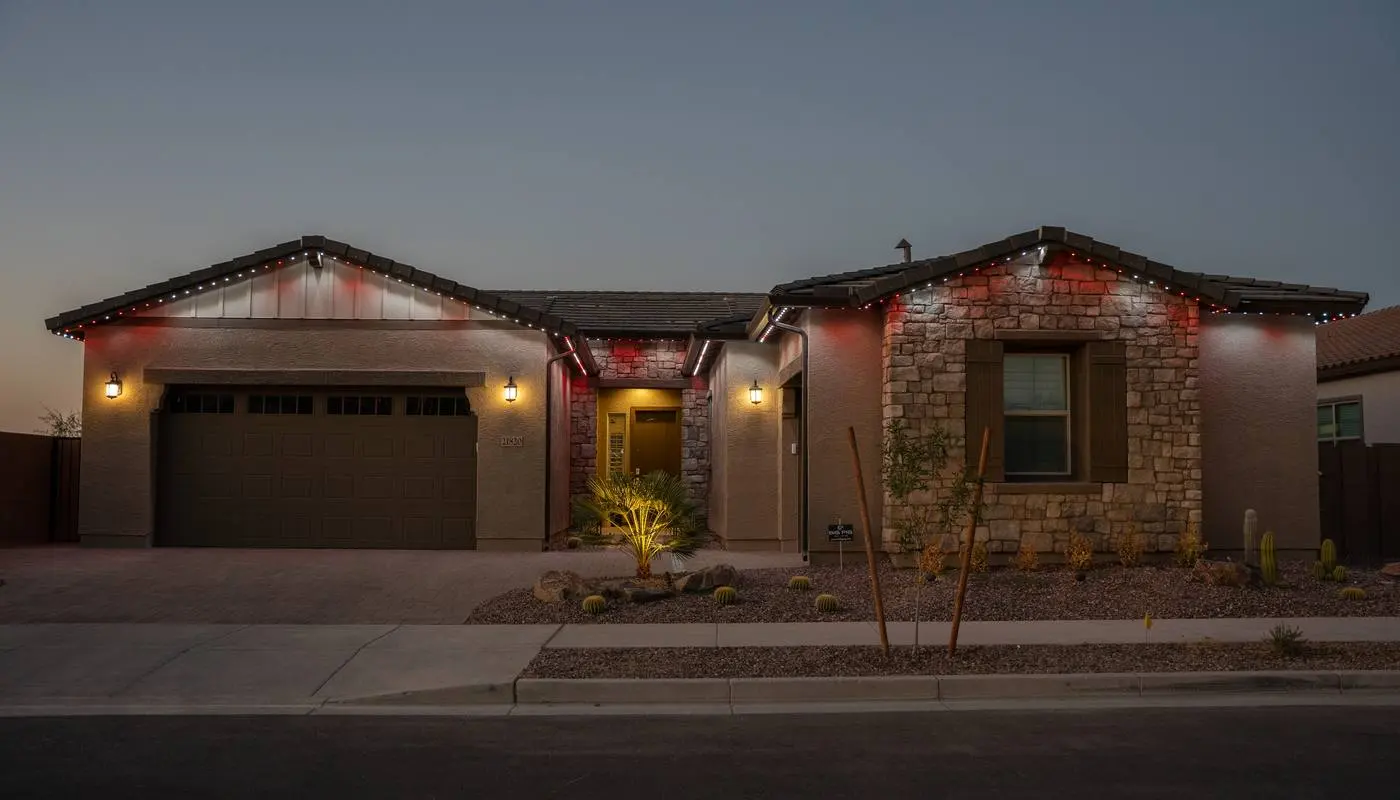
Permanent roofline lighting compared to seasonal Christmas lights: cost over time, appearance, labor, safety, and when seasonal lights really do win.
Read the guide
Buying Guide
How permanent lighting is actually priced, what drives the number up or down, and how to compare bids without getting fooled by a low per-foot rate.
The short version
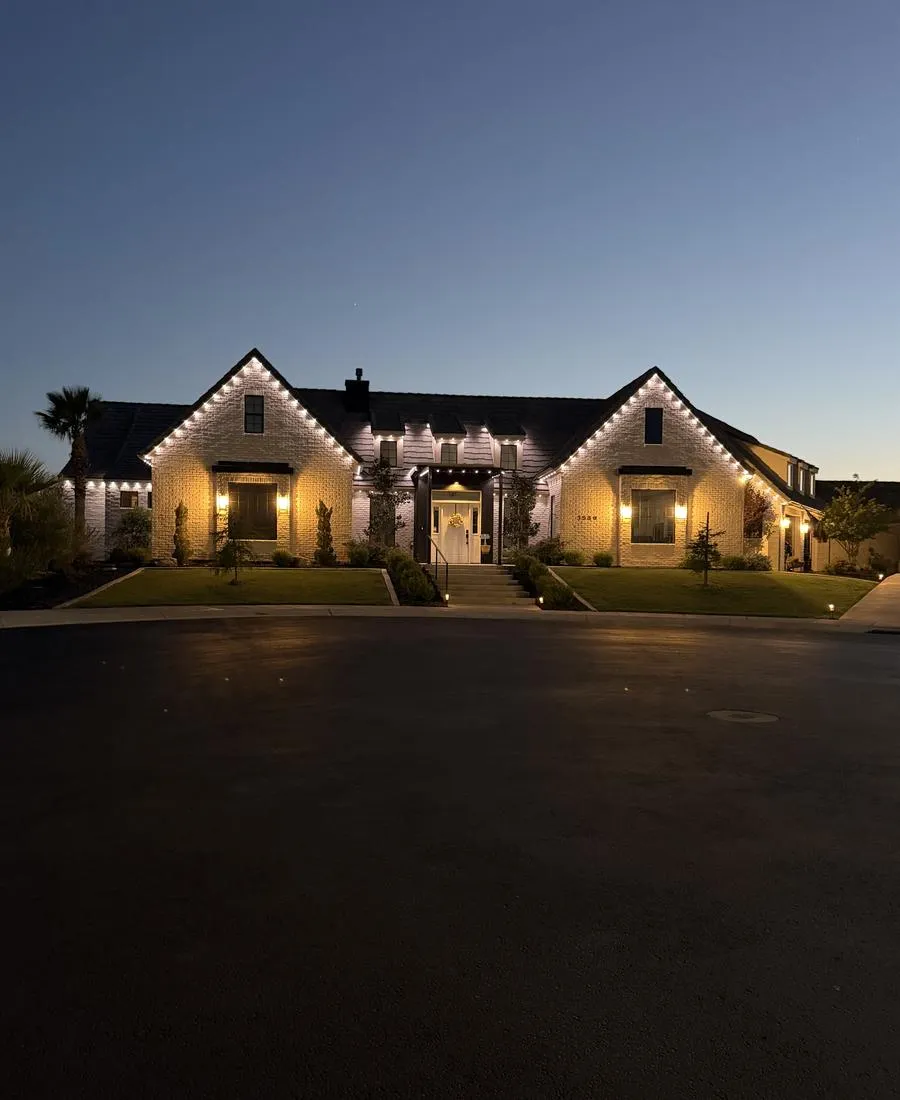
Permanent lighting is priced per linear foot of roofline. A typical single-family home runs about 100–130 feet. What makes two quotes differ by thousands is almost never the footage — it is fixture grade, channel quality, and whether the labor includes proper wiring and programming.
Nobody researching permanent lighting wants a page that refuses to discuss money. So let’s be direct about what we can and cannot tell you from a web page, and then give you everything that actually helps.
What we can’t responsibly do is publish one per-foot rate. Labor costs differ meaningfully between St. George and Tampa, a steep three-gable two-story takes far longer to install safely than a single-story ranch, and a quote that assumes the easy version would be wrong for most homes. Anyone advertising a single flat number online is either quoting the simplest possible house or planning to revise the number in your driveway.
What we can do is explain exactly how the pricing works, so when you get bids — from us or from anyone — you know what you’re comparing.
Essentially every reputable installer prices by linear foot of roofline. We walk your house and count the actual run we’re covering: the front fascia, the gables, the dormers, the returns, and any detached garage or outbuilding you want included.
A typical single-family home lands somewhere around 100 to 130 linear feet. That is a useful anchor, but it varies a lot:
So the first thing to establish on any quote is: how many feet, and which surfaces? A bid that covers only the front elevation will always look cheaper than one that includes the sides, and that difference has nothing to do with quality.
The dominant factor, and the one you can roughly estimate yourself. Pace off your front elevation and add the gable runs.
Footage alone does not capture difficulty. Steep pitches, second and third stories, multiple separate roof planes, dormers, turrets, and tight transitions all add install time per foot. Two homes with identical footage can differ substantially in labor.
Anything that makes safe access harder matters: height, landscaping that prevents ladder placement, narrow side yards, hardscape you can’t set equipment on, steep lots. This is a safety issue before it’s a cost issue.
More independently controllable zones means more wiring and more controller capacity. It also means finer control — being able to light the garage differently from the main house, for example. Ask how many zones a quote includes rather than assuming.
Labor rates, insurance, and permitting genuinely differ by region. This is why a per-foot rate quoted in one city is not transferable to another.
Soffit integration, tying into existing landscape lighting, additional controllers, extended warranty coverage. These should appear as separate line items so you can take them or leave them.
This is the part most pricing articles skip. When one bid comes in dramatically under another, the difference is almost never footage. It is usually one of these:
Fixture grade. Consumer-grade LED nodes in thin plastic housings cost a fraction of sealed commercial-grade fixtures. They also yellow, crack, and fail — fastest in exactly the climates where you most want the lights. Ask for the fixture manufacturer and the IP rating.
Channel quality. A thin, unfinished, or poorly extruded channel looks wrong from the street in daylight and warps under thermal cycling. Ask whether the channel is powder-coated to match your trim, or whether you’re getting one generic color.
Mounting method. Adhesive and clip-based mounting is faster and cheaper than mechanical fastening. It is also the first thing to let go off hot fascia in July or ice-loaded fascia in January. Ask specifically how the channel attaches.
Wiring and strain relief. Properly run, protected, strain-relieved wiring with weather-rated connections takes real time. Wire stapled along a fascia and joined with twist connectors does not.
Programming and handoff. Some installs end when the lights turn on. A complete handoff includes pairing your phone, building your initial scenes, configuring zones, setting a sunset schedule, assigning holiday presets, and confirming you can run it yourself. That’s an hour of a technician’s time that has to be in the price somewhere.
Warranty structure. “Lifetime warranty” means nothing without knowing who honors it and what it covers. Ask: is the product warranty from the manufacturer or the installer? Is labor covered on a warranty repair, or just the part? Who do you call?
Bring this list to each estimate:
A good installer will answer all ten without hesitating. Hesitation on any of them is informative.
That depends on how you count. If you only value December, permanent lighting takes several seasons of avoided install-and-removal fees to pay back.
But that framing undersells it, because the system isn’t a holiday product. Most of our customers run warm white accent lighting the overwhelming majority of nights — which is the same effect people pay for with permanent soffit or architectural lighting, and which no seasonal strand provides at all. You’re comparing one install against both a recurring annual service cost and a lighting upgrade you’d otherwise buy separately.
We break this down in detail in permanent lights versus hanging Christmas lights every year.
We measure your roofline in front of you, so the footage on the quote is traceable to something you watched happen. You get an itemized written price before we leave, with any options priced separately. There’s no deposit required to get a quote, no expiring discount, and no pressure to decide on the spot — plenty of people take a quote and install the following season.
If you want your specific number, request a free estimate or read our full pricing guide for how both services are quoted.
Written by
The Avid Home Services install team
We install permanent lighting across 11 markets and artificial turf in St. George, Utah. More about us →
Keep Reading
Buying GuidePermanent roofline lighting compared to seasonal Christmas lights: cost over time, appearance, labor, safety, and when seasonal lights really do win.
Read the guide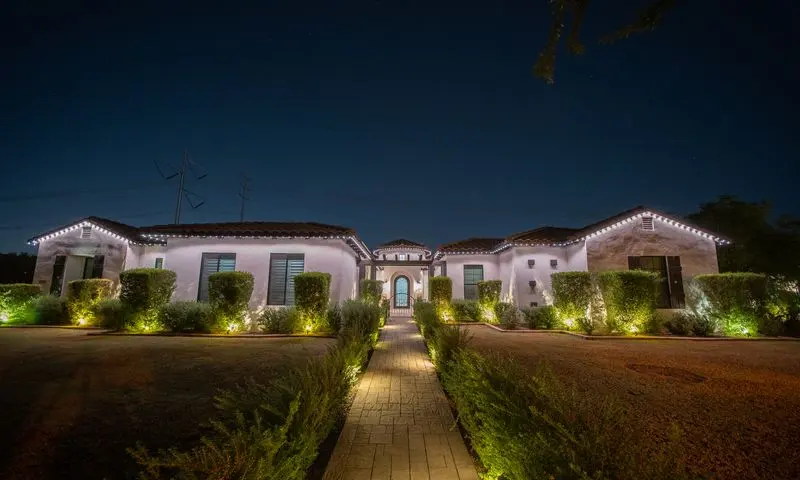 Permanent Lighting
Why permanent roofline lighting usually clears architectural review, the concerns boards actually raise, and what to do if your HOA says no at first.
Read the guide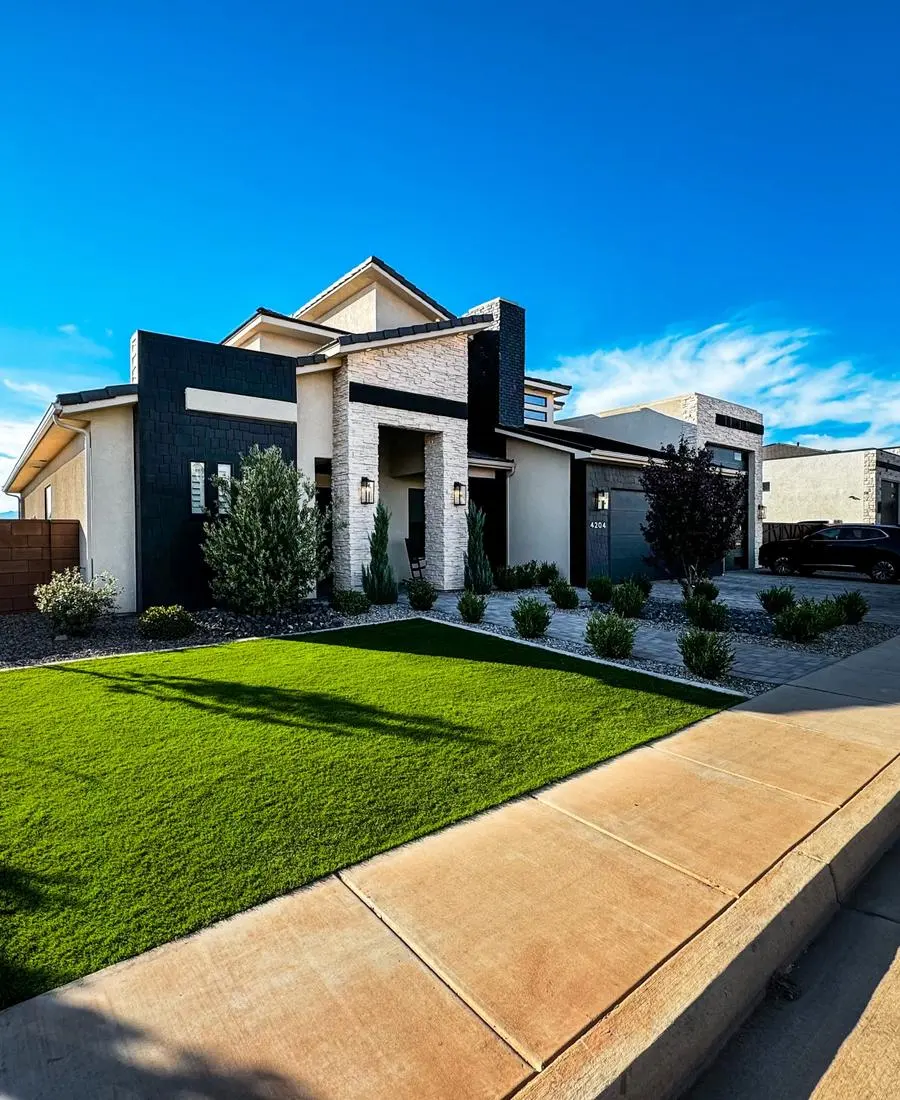 Artificial Turf
How artificial turf is priced in St. George, why two yards of the same size quote differently, and what base prep actually includes in a real bid.
Read the guideFree Estimate
We show up, measure your home, and give you an exact number on the spot. No deposit to get a quote, no pressure, no gimmicks.