 Buying Guide
Permanent vs. seasonal lights
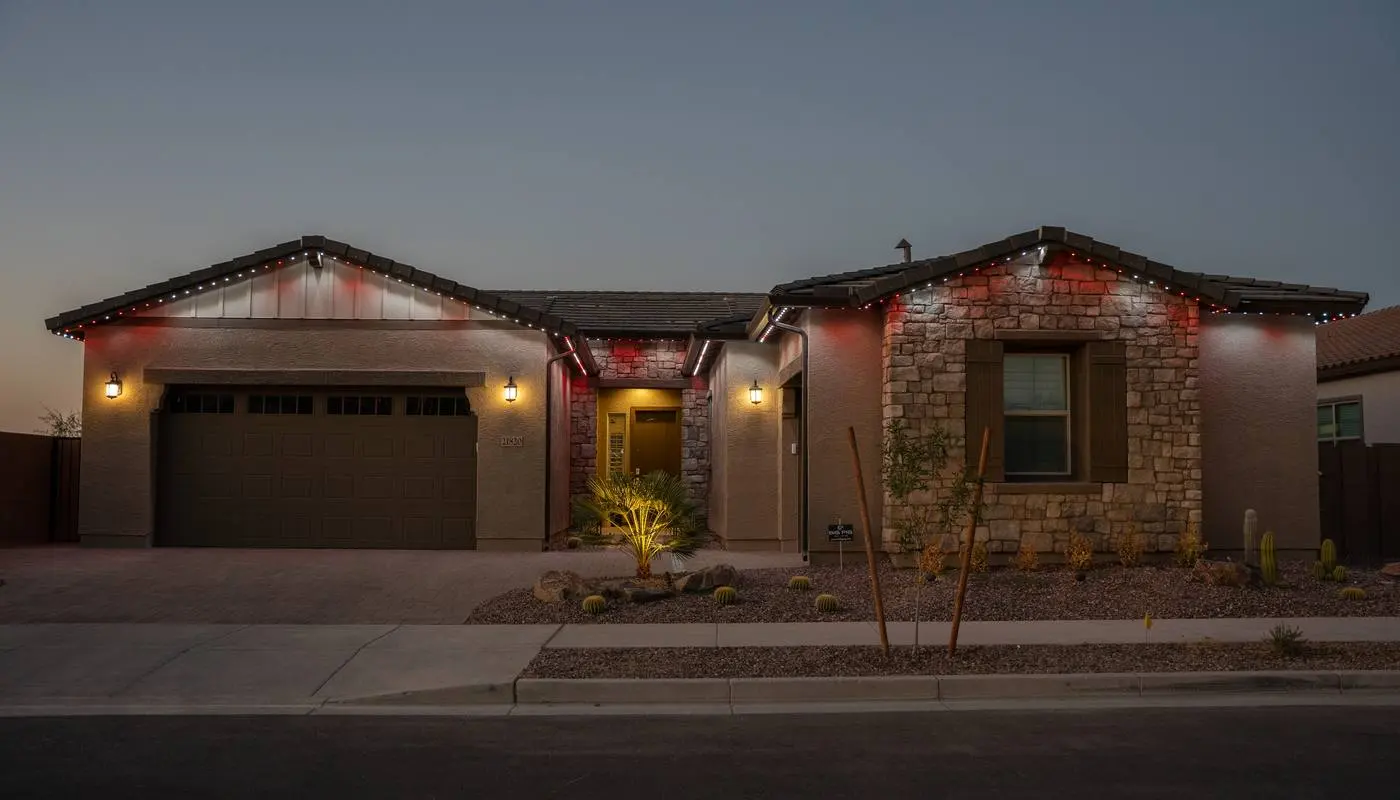
Permanent roofline lighting compared to seasonal Christmas lights: cost over time, appearance, labor, safety, and when seasonal lights really do win.
Read the guide
Permanent Lighting
Why permanent roofline lighting usually clears architectural review, the concerns boards actually raise, and what to do if your HOA says no at first.
The short version
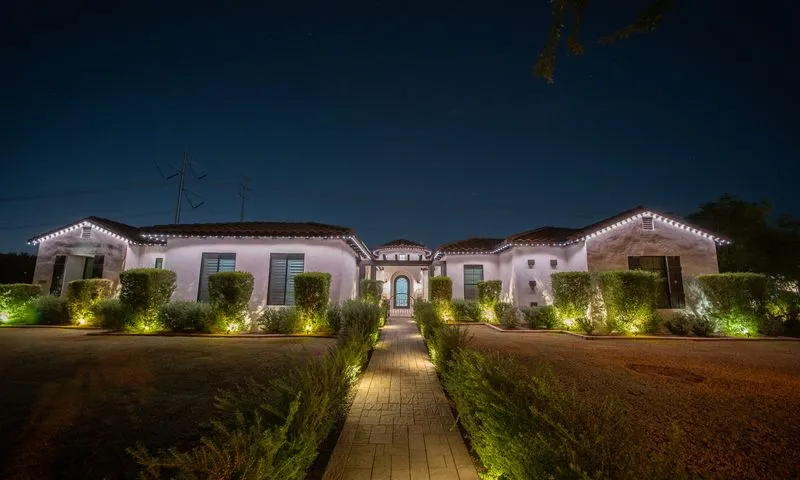
Most HOAs approve permanent lighting because a flush, trim-matched channel reads as architectural trim rather than a seasonal decoration. The approval usually hinges on daytime appearance and operating restrictions — both of which are easy to address in writing before you install.
This is the most common hesitation we hear, especially in Summerlin, Henderson, Daybreak, Nocatee, Celebration, and the newer master-planned communities in our other markets. The good news is that it’s usually a solvable problem, and often not a problem at all.
HOA rules on exterior lighting generally exist to address two things: temporary decorations displayed outside permitted date ranges, and light trespass onto neighboring properties.
A properly installed permanent lighting system sidesteps both.
It isn’t a temporary decoration. The channel is a permanently mounted architectural fixture, color-matched to your fascia, flush against it. Many CC&Rs that restrict holiday decorations by calendar date say nothing about permanent exterior fixtures — which is a different category in the governing documents.
It’s downward and outward facing. The fixtures sit inside a channel that directs light along and down the elevation rather than outward into the neighborhood. Properly aimed, it produces less light trespass than most floodlights or a poorly positioned landscape fixture.
It’s barely visible by day. This is the point that resolves most review-committee concerns. When the channel matches the trim and sits tight to the fascia, it reads as a shadow line from the street. Boards are generally far more concerned about daytime appearance than nighttime operation, because daytime appearance is what’s visible 100% of the time.
In our experience, review committees ask about four things.
The single most important question, and the easiest to answer with evidence. A daylight photograph of an installed home — ideally one with similar trim color — usually ends the discussion. Request this from your installer specifically; a nighttime photo doesn’t address the concern being raised.
Boards often imagine a permanently purple house. The realistic answer is that most homeowners run soft warm white and schedule it off at a reasonable hour. If needed, you can commit in writing to specific operating parameters: warm white outside defined holiday windows, off by a set time, no animation or flashing on normal nights.
That’s a commitment worth making voluntarily, because it’s how most people use the system anyway, and offering it proactively tends to resolve objections quickly.
No — and this matters for both HOA and insurance reasons. Fixtures mount to the fascia board, not through roofing material, so no roof penetration occurs and your roof warranty is unaffected. Say this explicitly in the submission.
Standard due diligence. Certificates of insurance and licensing should be provided without you having to push for them.
Treat it like any architectural modification request. The process is usually straightforward if your submission is complete.
Step 1 — Read your CC&Rs first. Search the document for “lighting,” “decorations,” “holiday,” “exterior modification,” and “architectural.” Find out whether you need approval at all. Sometimes you don’t.
Step 2 — Ask for the architectural review form. Most HOAs have a standard ARC submission. Get the actual form rather than sending an email, and note the submission deadline and review timeline — some boards meet monthly.
Step 3 — Assemble a complete packet. Include:
Step 4 — Lead with the architectural framing. Describe what you’re installing as permanent architectural accent lighting with optional seasonal color capability. That’s accurate, and it’s a meaningfully different proposition to a review board than “Christmas lights that stay up.”
Step 5 — Get the approval in writing. Don’t rely on a verbal yes from one board member. A written approval protects you if the board composition changes later.
We’ll supply every document in that list. Just tell us at the estimate that you need an HOA packet.
A first “no” is frequently a response to a misunderstanding rather than a settled position.
Ask which specific provision it violates. Boards sometimes decline by reflex. Requiring them to cite the governing section often reveals that the cited rule addresses temporary decorations, which this isn’t.
Offer written operating restrictions. Warm white only outside a defined holiday window, off by 11pm, no animation on ordinary nights. Many denials are really about worst-case fears, and constraining the worst case resolves them.
Provide a precedent. If any home in your community already has a permanent system installed, that’s highly persuasive. Your installer may know of one.
Request a trial period. Some boards will approve a conditional install subject to review after a season.
Attend the meeting in person. A homeowner showing up with a complete packet and a reasonable proposal lands very differently than a form in a stack.
Check whether your state has a relevant statute. Some states limit HOA authority over certain exterior improvements. This varies substantially and isn’t legal advice — but it’s worth a search for your state if you hit a wall.
If your CC&Rs explicitly prohibit permanently mounted exterior lighting fixtures, and your board confirms that reading in writing, don’t install anyway and hope. Retroactive enforcement means removal at your cost, and you lose the install either way.
Get the answer first. It’s a free question, and it takes a few weeks at most.
Tell us at your estimate that you have an HOA and we’ll assemble the submission packet before you need it — specs, insurance certificates, daytime and nighttime photos of comparable homes, and the fascia-mounting note. We’ll also hold your install date while the review runs, and we won’t ask for a deposit until you have your approval.
Request a free on-site estimate, or read how permanent lighting is priced.
Written by
The Avid Home Services install team
We install permanent lighting across 11 markets and artificial turf in St. George, Utah. More about us →
Keep Reading
Buying GuidePermanent roofline lighting compared to seasonal Christmas lights: cost over time, appearance, labor, safety, and when seasonal lights really do win.
Read the guide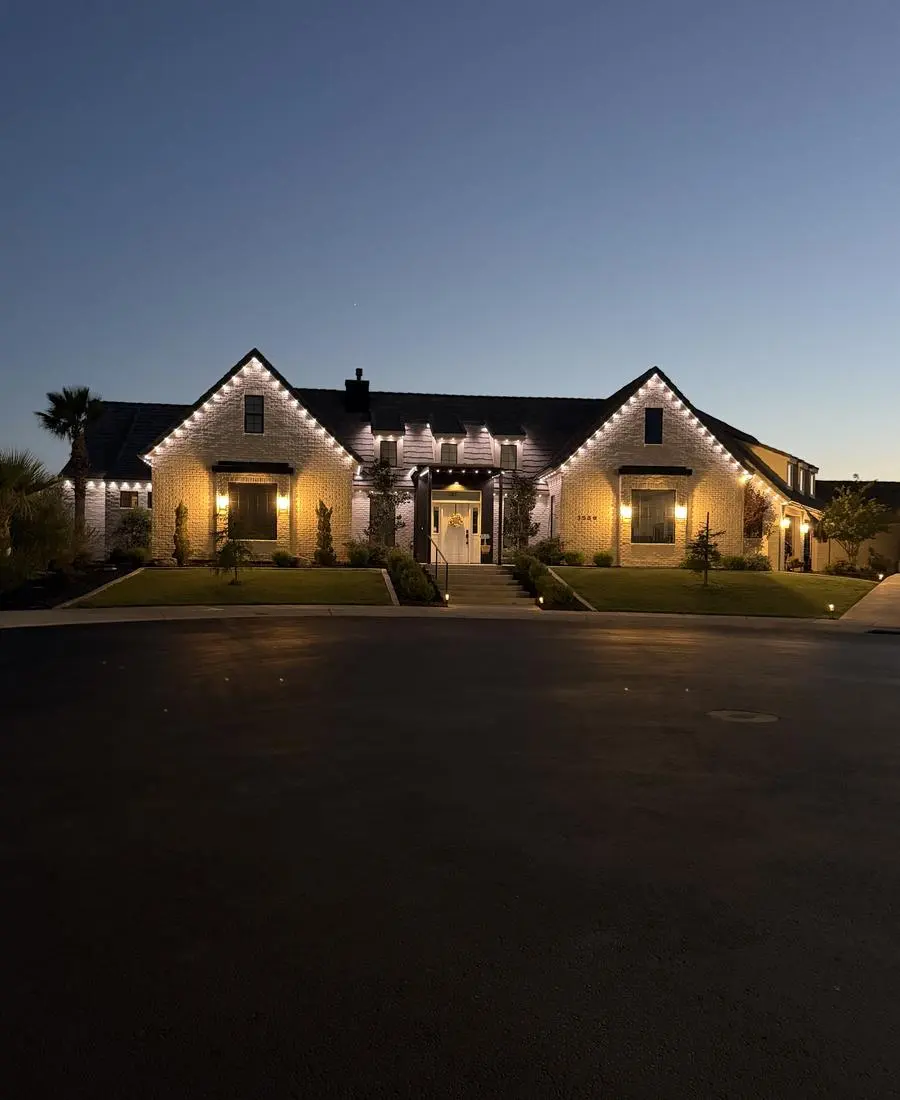 Buying Guide
How permanent lighting is actually priced, what drives the number up or down, and how to compare bids without getting fooled by a low per-foot rate.
Read the guide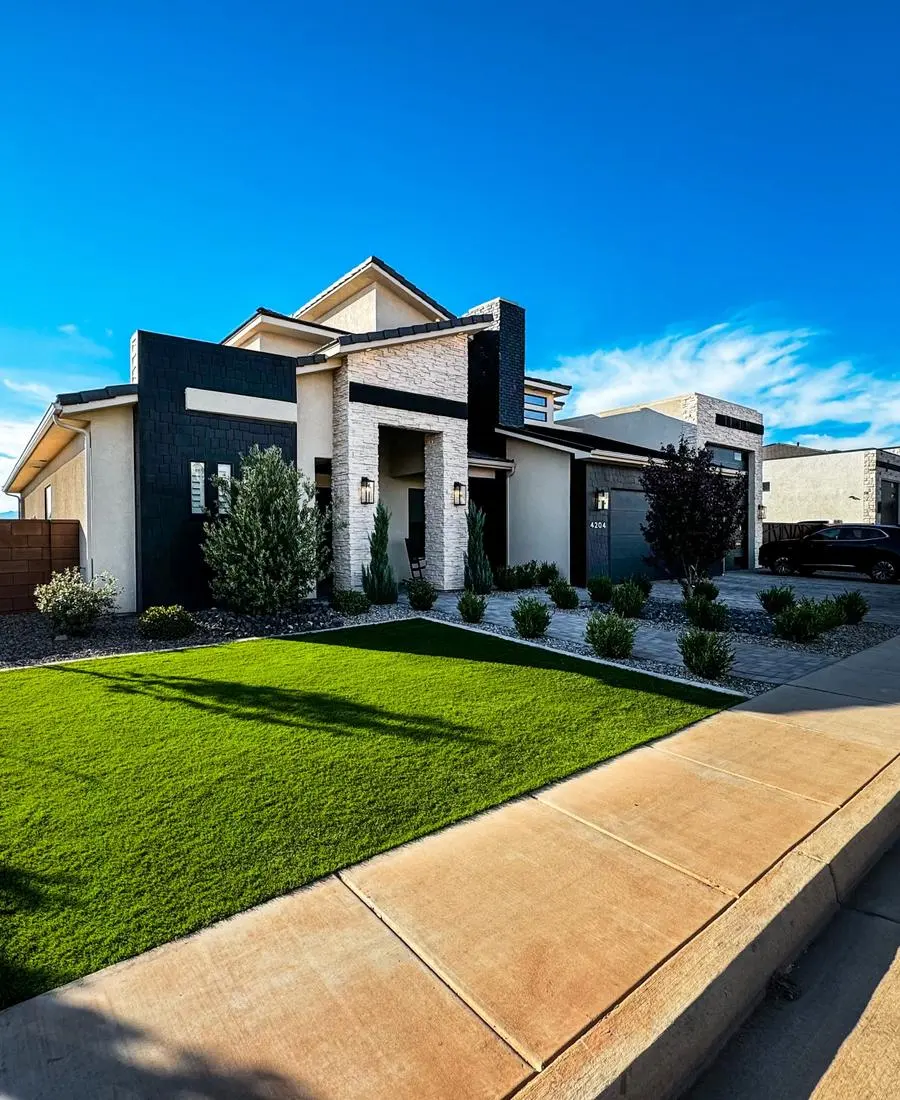 Artificial Turf
How artificial turf is priced in St. George, why two yards of the same size quote differently, and what base prep actually includes in a real bid.
Read the guideFree Estimate
We show up, measure your home, and give you an exact number on the spot. No deposit to get a quote, no pressure, no gimmicks.